
Renovating or Demolishing in Ontario? Here’s Why You Need a Designated Substance Survey (DSS)
- August 12, 2026
- Posted by: Nathan Edwards
- Categories: Asbestos Assessment / Survey, Asbestos Sampling, Designated Substance Survey, Environmental Consultant, Environmental Consulting, Environmental Site Assessment (ESA), IES Consulting
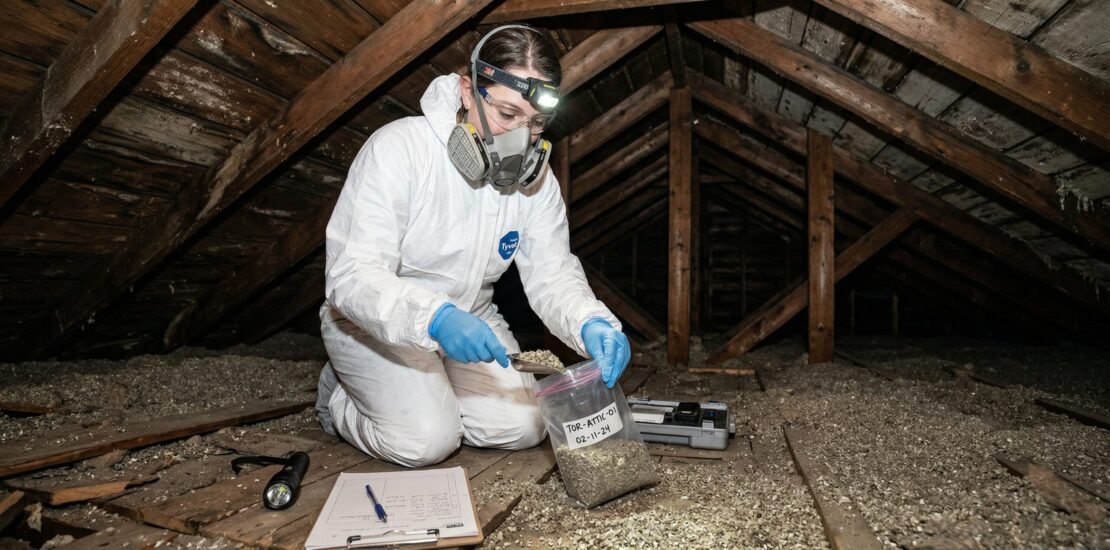
Planning a renovation or demolition project in Ontario? Before the walls come down, flooring is removed, ceilings are opened, or contractors begin disturbing existing building materials, there is an important question to answer:
Do you know what hazardous materials may be present in the building?
Many buildings contain materials that can present health and safety concerns when disturbed during construction. Some of these materials may contain substances regulated under Ontario’s occupational health and safety requirements.
That is where a Designated Substance Survey (DSS) comes in.
A DSS can help identify designated substances and other hazardous building materials that could be affected by renovation or demolition work. Completing the appropriate assessment before work begins helps property owners, contractors, project managers, and workers understand potential hazards and plan the project accordingly.
Whether you are renovating a commercial property, updating an industrial facility, altering an office, or preparing a building for demolition, understanding the existing materials is an important part of pre-construction planning.
Here’s what Ontario property owners and project teams should know about Designated Substance Surveys.
What Is a Designated Substance Survey?
A Designated Substance Survey, commonly called a DSS, is an assessment used to identify designated substances that may be present in a building or project area and could be affected by planned work.
Ontario Regulation 490/09 identifies 11 designated substances:
- Acrylonitrile
- Arsenic
- Asbestos
- Benzene
- Coke oven emissions
- Ethylene oxide
- Isocyanates
- Lead
- Mercury
- Silica
- Vinyl chloride
These substances are regulated because worker exposure can create serious health and safety concerns.
The substances relevant to a particular renovation or demolition project depend on factors such as the building, its age and history, the materials present, previous renovations, its past or current use, and the scope of work being proposed.
A DSS allows these potential concerns to be investigated before workers begin disturbing building materials.
For more information about designated substances and Ontario’s requirements, see the Ontario government’s Designated Substances regulation.
Why Do You Need a DSS Before Renovation or Demolition?
The purpose of completing a DSS before renovation or demolition is simple: you want to know what you’re about to disturb before you disturb it.
Building materials that have remained in place for years can become a concern when construction begins.
Renovations commonly involve activities such as:
- Removing walls and ceilings
- Pulling up flooring
- Cutting or drilling concrete
- Removing mechanical systems
- Replacing insulation
- Sanding or grinding surfaces
- Removing old coatings
- Opening wall cavities
- Demolishing portions of a building
These activities can disturb materials that may contain asbestos, lead, silica, mercury, or other hazardous substances.
Without an appropriate assessment, workers may begin demolition without knowing that a potentially hazardous material is present.
Identifying these concerns beforehand allows the project team to plan how affected materials will be managed and what controls or additional work may be necessary.
Ontario Has Specific Requirements for Asbestos Before Certain Work
Asbestos deserves particular attention because Ontario has specific requirements addressing asbestos on construction projects and in buildings and repair operations.
Ontario Regulation 278/05 applies to circumstances including construction projects, repair or alteration of buildings, and demolition.
Ontario’s guidance states that before requesting tenders, arranging, or contracting for demolition, alteration, or repair work, an owner must determine whether certain materials likely to be handled, disturbed, or removed are asbestos-containing material, or treat them as asbestos-containing in accordance with the regulation.
This makes investigating potentially asbestos-containing materials an important part of planning renovation and demolition work in Ontario.
Demolition also has specific requirements. Ontario’s regulation states that demolition can only be carried out or continued when asbestos-containing material that may be disturbed has been removed to the extent practicable, subject to the requirements and exceptions within the regulation.
You can review the Ontario government’s asbestos requirements for demolition, alterations and repairs for additional information.
What Can a DSS Find?
Every property is different, which means every Designated Substance Survey is different.
A DSS considers designated substances that may be relevant to the building and proposed work.
Some substances are more commonly associated with certain building materials and activities.
Asbestos has historically been used in numerous building materials. Depending on the building, asbestos-containing materials may be associated with insulation, flooring, ceiling materials, mechanical insulation, cement products, and other construction materials.
Lead can be present in certain paints, coatings, and building components.
Mercury may be found in some older electrical or mechanical equipment.
Silica is present in materials commonly encountered during construction, including concrete, masonry, stone, and similar products.
Other designated substances may become relevant based on the historical or current use of a building, industrial processes, equipment, or materials present on the property.
The goal is to understand which hazards may be encountered during the proposed work so the project can be planned appropriately.
You Can’t Always Identify Hazardous Materials by Looking at Them
One reason a professional assessment is valuable is that potentially hazardous building materials are not always obvious.
A ceiling tile does not necessarily look dangerous.
Neither does flooring, insulation, drywall compound, concrete, paint, or mechanical insulation.
Potentially hazardous materials may also be hidden from view.
They can exist:
- Behind walls
- Above suspended ceilings
- Under existing flooring
- Around pipes and mechanical systems
- Inside wall and ceiling assemblies
- Behind newer finishes
- Within older equipment
- Beneath materials installed during previous renovations
A building may also contain materials from several different periods.
For example, a property built decades ago may have been renovated multiple times. The finishes you see today may be relatively new while older materials remain underneath or behind them.
This is why simply walking through a building and assuming everything looks fine is not an appropriate substitute for understanding what materials will actually be disturbed.
What Happens During a Designated Substance Survey?
The scope of a DSS depends on the building and proposed project.
One of the first steps is understanding exactly what work is planned.
A small renovation affecting one room may require a different scope than a complete interior demolition or demolition of an entire building.
An environmental consultant may review available building information and inspect accessible areas relevant to the planned work.
Potentially hazardous materials can be documented and, where appropriate, representative samples may be collected and submitted for laboratory analysis.
The findings are then documented in a report that can help identify the substances and materials relevant to the project.
This information can then be considered by the owner, consultants, contractors, and other project stakeholders when determining how the work should proceed.
When Should You Get a DSS?
Ideally, environmental assessment should happen during the planning stage, before renovation or demolition begins.
Waiting until contractors are already on site can create unnecessary complications.
Consider what happens if a contractor opens a wall during demolition and encounters a material suspected of containing asbestos.
Work in the affected area may need to stop while the material is investigated.
This is also the kind of situation that can trigger a Ministry of Labour inspection — our overview of what MOL inspectors look for and how to prepare walks through what that process typically involves.
Sampling and laboratory analysis may be required. Depending on the results, additional environmental controls or abatement work may be necessary.
Now the project schedule has potentially changed after trades, equipment, and resources have already been booked.
Identifying potential concerns beforehand gives the project team an opportunity to account for them when developing the scope, schedule, budget, and construction plan.
The best time to discover a hazardous material is before demolition starts—not halfway through it.
What Happens If a Designated Substance Is Found?
Finding a designated substance does not automatically mean that your renovation or demolition project cannot proceed.
The important part is knowing that the material exists.
Once identified, the project team can determine what requirements, controls, procedures, or additional work apply to the circumstances.
The appropriate response depends on factors such as:
- The substance identified
- Where it is located
- The condition of the material
- How much material is present
- Whether the planned work will disturb it
- The type of work being performed
- Applicable regulatory requirements
In some situations, hazardous materials may need to be removed or appropriately managed before other construction activities can proceed.
Having this information early allows those requirements to become part of the project plan instead of an unexpected problem discovered during construction.
Can a DSS Help Prevent Renovation Delays?
A DSS cannot guarantee that every hidden condition within a building will be discovered before construction.
However, proper investigation can significantly improve what the project team knows about the building before work begins.
Unexpected discoveries during demolition can be expensive and disruptive.
Workers may have to stop. Contractors may need to reschedule. Samples may need to be analyzed. Additional environmental work may need to be coordinated.
When known environmental concerns are identified during pre-construction planning, the project team has more time to address them.
That can make a DSS valuable not only from a health and safety perspective but also from a project planning and risk management perspective.
Is a DSS Only Necessary for Old Buildings?
Older buildings deserve particular attention because certain hazardous materials were historically used more frequently in construction.
However, building age should not be your only consideration.
Some designated substances remain associated with materials used in modern construction. Silica, for example, is associated with common materials such as concrete and masonry.
Properties can also contain additions and renovations completed at different times.
A building constructed in one decade might contain an addition from another decade and interior renovations completed years later.
The appropriate assessment should therefore consider the actual building, the materials present, and the scope of the proposed work rather than relying exclusively on the building’s age.
Who Should Think About a DSS?
Designated Substance Surveys can be relevant across many types of Ontario properties and projects.
This can include:
- Commercial renovations
- Industrial facilities
- Offices
- Retail properties
- Institutional buildings
- Warehouses
- Multi-unit residential properties
- Property redevelopment
- Building additions
- Restoration projects
- Partial demolition
- Complete building demolition
Building owners, property managers, facility managers, developers, general contractors, architects, engineers, and project managers may all encounter situations where understanding designated substances is an important part of planning the work.
The key question is not simply “How old is this building?”
A better question is:
“What materials are we going to disturb?”
DSS vs. Asbestos Testing: What’s the Difference?
Asbestos testing and a Designated Substance Survey are related, but they are not necessarily the same thing.
Asbestos is one of Ontario’s 11 designated substances.
A DSS can consider additional designated substances such as lead, mercury, and silica, as well as other substances relevant to the particular property and project.
The appropriate scope depends on the work being performed.
Taking one sample from one suspicious material does not necessarily provide the same information as assessing the areas and materials that will be affected by a renovation or demolition project.
This is another reason why providing your environmental consultant with a clear scope of the proposed construction work is important.
Planning a Renovation or Demolition in Ontario? Start Before the Work Begins
Renovation and demolition projects already involve plenty of moving pieces: contractors, schedules, permits, budgets, materials, equipment, and deadlines.
Discovering an unexpected hazardous material after work begins is one complication you want to minimize.
Before contractors start opening walls, removing ceilings, cutting concrete, tearing out flooring, or demolishing building components, make sure you understand what they may encounter.
A Designated Substance Survey can help identify potential hazards, provide valuable information for contractors and project teams, and allow environmental considerations to become part of the project plan from the beginning.
Plan first. Know what’s there. Then renovate or demolish with the right information in hand.
Need a Designated Substance Survey in Ontario?
IES Consulting has been providing environmental, health, and safety expertise in Southern Ontario since 1996.
We provide Designated Substance Surveys and hazardous materials consulting to help property owners, businesses, contractors, facility managers, and project teams understand potential environmental concerns before renovation and demolition work begins.
IES Consulting serves communities throughout Southern Ontario, including Windsor-Essex, Chatham-Kent, Sarnia-Lambton, London-Middlesex, and surrounding areas.
If you’re planning a renovation, alteration, or demolition and aren’t sure what environmental assessments you may need, our team can help you determine an appropriate next step.
Contact IES Consulting to discuss your upcoming renovation or demolition project.