
Vermiculite Insulation in Ontario: Does It Need to Be Tested for Asbestos?
- September 9, 2026
- Posted by: Nathan Edwards
- Categories: Asbestos Sampling, Environmental Consultant, Environmental Consulting, IES Consulting
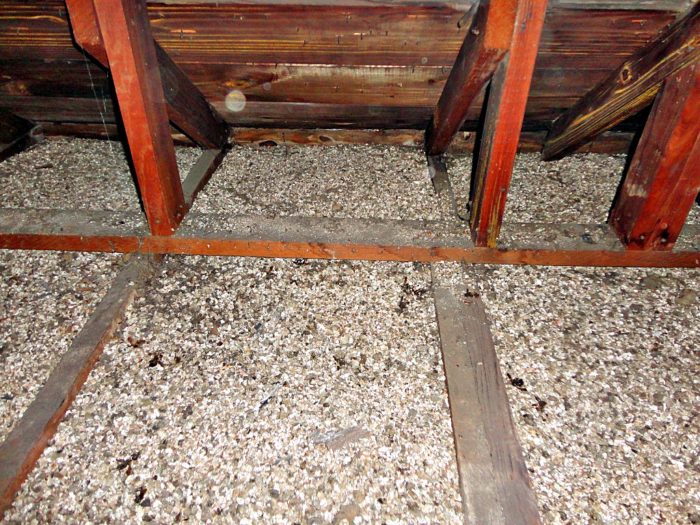
If you own, renovate or work on an older building in Ontario, discovering vermiculite insulation in an attic or wall cavity can raise an immediate question: does this insulation contain asbestos?
The answer is not always straightforward. Not all vermiculite insulation contains asbestos. However, some vermiculite insulation installed in Canadian buildings may have been produced from ore contaminated with asbestos, which is why discovering older vermiculite should be taken seriously, particularly before renovation, demolition or other work that could disturb the material. Understanding what vermiculite is, why asbestos may be associated with it, and what to do before disturbing it can help property owners and contractors make informed decisions and protect workers and occupants.
What Is Vermiculite Insulation?
Vermiculite is a naturally occurring mineral that expands when heated. The expanded material is lightweight, fire-resistant and has insulating properties, which made it useful as loose-fill insulation in attics and wall cavities. It commonly appears as small, lightweight granules that may range in colour from silver-grey to brown or gold. The presence of vermiculite itself does not automatically mean asbestos is present — the concern comes from the historical source of some vermiculite products.
Why Is Vermiculite Associated With Asbestos?
A significant amount of the vermiculite insulation used in North America historically originated from a mine near Libby, Montana. Natural deposits of asbestos were present near the vermiculite ore at this mine, resulting in some of the vermiculite becoming contaminated with asbestos fibres. Vermiculite from the Libby mine was sold in Canada under the brand name Zonolite® Attic Insulation, as well as potentially through other products. Natural Resources Canada states that vermiculite ore from the Libby mine was produced from the 1920s until 1990 and may have contained amphibole asbestos. This history is why older vermiculite insulation should not simply be assumed to be asbestos-free.
Does All Vermiculite Insulation Contain Asbestos?
Not all vermiculite insulation contains asbestos, and not all vermiculite used in Canada came from the Libby mine. However, determining the origin of insulation in an existing building can be difficult — packaging and installation records may be long gone, and visually similar materials may have come from different sources. Natural Resources Canada advises that, in the absence of evidence to the contrary, it is reasonable to assume older vermiculite insulation may contain some asbestos. This does not necessarily mean the insulation presents an immediate danger simply because it exists in the building; the condition of the material and whether it will be disturbed are important considerations.
Is Vermiculite Dangerous If It Is Left Alone?
Potential asbestos exposure becomes a concern when asbestos-containing materials are disturbed and fibres are released into the air. Health Canada indicates that asbestos-containing materials generally do not pose a significant health risk when they are left undisturbed, isolated in an attic, sealed behind walls or otherwise kept in good condition. The situation changes when work is planned — activities such as renovating an attic, installing new insulation, removing existing insulation, running electrical wiring, installing pot lights or ceiling fixtures, cutting into ceilings or walls, HVAC work, roofing or structural work that affects the attic, and demolition can all potentially disturb existing insulation. This is why identifying potential asbestos hazards before work begins is so important.
Can You Tell If Vermiculite Contains Asbestos by Looking at It?
The appearance of vermiculite alone cannot reliably establish whether asbestos is present. A visual inspection can help an experienced environmental professional identify material that appears consistent with vermiculite and assess its location and condition, but visual identification is not the same as laboratory analysis. Property owners and contractors should also avoid unnecessarily handling or disturbing suspect material simply to inspect it more closely. If there is uncertainty about an existing material, an environmental consultant can help determine the appropriate next step.
Should Vermiculite Be Tested Before Renovation in Ontario?
When older vermiculite insulation may be affected by renovation, demolition or maintenance work, the potential presence of asbestos should be addressed before the material is disturbed. Health Canada recommends avoiding the disturbance of materials that may contain asbestos and hiring a professional to test for asbestos before renovating or remodelling. Ontario also regulates asbestos on construction projects and in buildings and repair operations through Ontario Regulation 278/05 – Designated Substance: Asbestos on Construction Projects and in Buildings and Repair Operations under the Occupational Health and Safety Act. The regulation establishes requirements for identifying asbestos-containing materials, informing workers and controlling asbestos-related work in situations where the regulation applies, and it includes specific procedures for establishing whether a material is asbestos-containing, including requirements relating to representative bulk material sampling and laboratory analysis. The appropriate approach depends on the building, the material, the planned work and the regulatory requirements that apply to the project.
Why Vermiculite Sampling Requires Care
Vermiculite can present challenges that differ from many other building materials. Asbestos contamination may not necessarily be distributed uniformly throughout loose-fill insulation, so simply grabbing a small amount from one convenient location may not provide the information needed to properly characterize the material. The U.S. Environmental Protection Agency takes a particularly cautious position regarding vermiculite insulation, recommending that it be assumed to potentially be contaminated with asbestos and that disturbance be avoided unless the work is performed by appropriately trained professionals. This is another reason homeowners and contractors should avoid attempting to collect samples themselves without understanding the potential risks and applicable sampling requirements — an environmental consultant can assess the situation and determine an appropriate course of action.
What Happens If Asbestos Is Identified?
Finding asbestos does not automatically mean an entire building needs to be stripped of every asbestos-containing material. The next step depends on several factors, including where the material is located, its condition, whether it is friable, the work being planned, the likelihood that the material will be disturbed, the quantity and extent of the material, and applicable Ontario requirements. If asbestos-containing vermiculite will be disturbed or removed, appropriate asbestos control or abatement procedures may be required, and a qualified asbestos abatement contractor can provide pricing and determine the logistics of the removal work based on the project’s specific conditions. This is why an environmental assessment can be valuable before assuming the scope or cost of remediation: first identify the hazard, then determine the appropriate response.
Can New Insulation Simply Be Installed Over Existing Vermiculite?
This is a question that should be considered carefully. Adding insulation may sound straightforward, but workers may need to enter the attic, move existing insulation, install baffles, access electrical components or otherwise disturb the area. If suspected asbestos-containing vermiculite is present, those activities could potentially create exposure. Before insulation contractors begin work around older vermiculite, the material and proposed scope of work should be evaluated so that appropriate precautions can be determined. For contractors, identifying this issue early can also prevent an unexpected discovery from stopping a project after work has already begun.
What Should Contractors Do When They Find Vermiculite?
If unexpected vermiculite or another suspected asbestos-containing material is discovered during work, it should not be unnecessarily disturbed. Rather than guessing whether the material contains asbestos, the next step should be determining how it needs to be assessed and managed. Early identification can help protect workers and building occupants, prevent unnecessary disturbance of suspect materials, establish the appropriate scope of work, reduce unexpected project delays, give property owners better information before making remediation decisions, and help contractors plan their work appropriately. For restoration, construction and insulation contractors, having an environmental consultant available when unexpected materials are discovered can make this process considerably easier.
Understanding Ontario’s Asbestos Requirements
Ontario Regulation 278/05 establishes requirements for asbestos on construction projects and in certain building repair, alteration and maintenance operations. Among other things, the regulation addresses asbestos identification, worker information, asbestos management, demolition and different classifications of asbestos operations. Under the regulation, material containing 0.5% or more asbestos by dry weight, when established through the prescribed bulk material analysis process, is considered asbestos-containing material for purposes of the regulation. There are important details and exceptions within the regulation, including provisions concerning certain owner-occupied residential properties, so requirements should be evaluated based on the particular property and work being performed rather than assuming every situation is identical.
The Bottom Line: Don’t Guess About Vermiculite
Discovering vermiculite insulation does not automatically mean that asbestos is present, nor does it automatically mean an expensive removal project is required. It does mean the material deserves attention before it is disturbed. If you are planning renovation, demolition, restoration, electrical, HVAC or insulation work around older vermiculite, identifying potential asbestos hazards before work begins can help protect workers, occupants, schedules and budgets. When in doubt, assess before you disturb.
How IES Consulting Can Help
IES Consulting provides environmental consulting and asbestos-related services to help property owners, contractors, restoration professionals and other clients understand potential environmental hazards before and during their projects. Our team can assist with asbestos assessments, sampling and other environmental consulting services to help determine what you’re dealing with and what steps may be appropriate before work proceeds. If you’ve discovered vermiculite insulation or are planning work in an older building, contact IES Consulting to discuss your project.