
High Radon Found in a Blenheim Home: What Chatham-Kent Homeowners Should Know
- September 29, 2026
- Posted by: Nathan Edwards
- Categories: Environmental Consultant, Environmental Consulting, Radon Testing
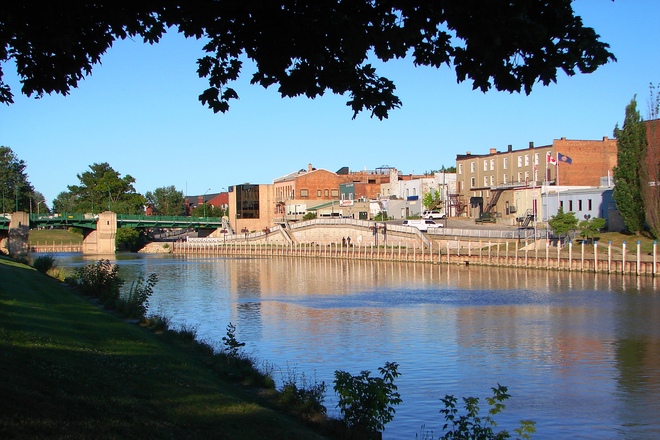
IES Consulting recently completed a long-term radon test at a home in Blenheim, Chatham-Kent. The result came back well above Health Canada’s guideline of 200 Bq/m³.
The homeowners had no way of knowing. There was no smell, no visible warning sign and nothing about the house that looked any different from the other homes on the street. The only reason they know now is because they tested.
That’s the challenge with radon. It’s one of the most significant indoor air quality risks in Canadian homes, and it gives no clues at all. In this article, we’ll explain what we found in Blenheim, why radon has been a concern in Chatham-Kent for years, and what homeowners across the area can do to find out where their own home stands.
What We Found in Blenheim

The Blenheim home was tested using a long-term radon measurement, which is the approach Health Canada recommends for deciding whether a home needs action. Long-term testing captures how radon levels rise and fall over weeks and months, rather than relying on a short snapshot that might catch an unusually high or low day.
When the test was complete, the home’s result was well above the 200 Bq/m³ guideline. This wasn’t a borderline reading or a single spike. It was a clear indication that radon was building up inside the home over an extended period.
For the homeowners, the result was unexpected. For us, it was a reminder of why testing matters so much in this part of Ontario.
What the Blenheim Result Does and Doesn’t Mean
It’s important to be clear about what one test can and can’t tell us.
One result from one home does not tell us the radon level across Blenheim or Chatham-Kent. Radon is a building-specific issue. Two homes on the same street can have very different radon concentrations depending on the soil beneath them, the type of foundation, cracks and openings in the basement, how the home is ventilated and even how it’s lived in day to day.
What this result does tell us is that high radon isn’t just something that happens in other parts of Canada. It’s being found right here in our community, in an ordinary home that gave no reason for concern.
Radon Has Been a Concern in Chatham-Kent for Years
The Blenheim result isn’t the first sign that radon deserves attention locally.
Health Canada’s Cross-Canada Survey of Radon Concentrations in Homes included 201 homes in the Chatham-Kent Health Unit area. Of those, 18.4% had radon concentrations at or above 200 Bq/m³. Specifically, 15.4% were between 200 and 600 Bq/m³ and another 3.0% were above 600 Bq/m³.
Those are historical survey results, not an estimate of how many Chatham-Kent homes are above the guideline today. But they show that elevated radon has been documented in this area for well over a decade.
In 2018, The Chatham Voice reported on Health Canada’s visit to the Chatham-Kent Home and Garden Show, where a Health Canada radiation specialist encouraged local residents to test their homes for radon gas. The message then was simple: the only way to know your home’s level is to test.
The Blenheim result shows that message still applies today.
What Is Radon?
Radon is a naturally occurring radioactive gas. According to Health Canada, it comes from the natural breakdown of uranium in soils and rocks.
Outdoors, radon mixes with the air and is diluted to low levels, so it isn’t a concern. The problem starts when radon enters an enclosed space like a home, where it can accumulate to much higher concentrations.
You can’t see, smell or taste radon. That means there’s no way to judge a home’s radon level by walking through it or inspecting it. A newer home, an older home, a home with a finished basement or one with a crawlspace can all have elevated radon. Testing is the only way to know.
How Radon Gets Into Your Home
Radon moves up through the soil and enters a home wherever it finds an opening. Common entry points include:
Cracks in basement floors and foundation walls
Gaps around pipes, wires and service penetrations
Floor drains and sump pits
Construction joints where walls meet floors
Exposed soil in crawlspaces or cold rooms
Homes also tend to draw radon in. The air pressure inside a house is often slightly lower than the air pressure in the soil around the foundation, especially in cold weather when the furnace is running and warm air rises and escapes through the upper floors. That pressure difference can pull soil gas, including radon, into the lower levels of the home.
Modern, energy-efficient homes are very good at keeping heated air inside, which is great for comfort and energy bills. But it can also mean that radon, once it gets in, has fewer ways to get out.
Why Radon Matters for Your Health
Radon matters because of what happens when it’s breathed in over a long period of time. As radon decays, it releases radioactive particles that can damage the cells lining the lungs.
Health Canada identifies radon as the leading cause of lung cancer among non-smokers. The Canadian Centre for Occupational Health and Safety notes that radon is responsible for approximately 16% of lung cancer deaths in Canada, and that people who smoke and are also exposed to elevated radon face an even higher risk.
The key word is exposure. The risk from radon depends on how much radon is in the air and how long people breathe it. That’s why the level inside the rooms where your family spends the most time matters so much.
Health Canada’s Radon Guideline
Health Canada’s guideline is 200 becquerels per cubic metre (Bq/m³). If a home’s average annual radon level is above 200 Bq/m³ in the normal living area, Health Canada recommends taking action to reduce it. Its guide for radon measurements in homes also notes that the higher the radon level, the sooner action should be taken, and that corrective work should bring the concentration down as much as is practical.
That guideline applies to the long-term average, not a single hourly or daily reading. Radon levels naturally rise and fall throughout the day and across the seasons. A short spike doesn’t necessarily mean a home is above the guideline, and a single low reading doesn’t mean it’s below it.
Why the Blenheim Test Was Long-Term
Health Canada recommends conducting radon tests over a period of three to 12 months to accurately determine a home’s average annual radon level, and considers 91 days the minimum test length for a valid result.
Radon levels in a home can change because of the weather, ventilation, how often windows and doors are opened, daily and seasonal fluctuations and the way the home is used. The longer the test, the better it reflects what the people living in the home are actually breathing over time.
The Blenheim result wasn’t a quick snapshot. It reflects the home’s average over a long-term test period, which is exactly the kind of result Health Canada’s guideline is meant to be measured against.
Why Fall and Winter Are the Best Time to Test
Health Canada recommends that at least 91 days of a long-term test take place during the heating season. Indoor radon levels are typically higher in colder months because windows and doors stay closed and the stack effect pulls more soil gas into the home.
Testing during this period generally gives a more conservative estimate of a home’s annual radon level. A test done mostly in summer, when homes are more open and ventilated, risks underestimating the average and may need to be repeated.
For Chatham-Kent homeowners, that makes right now an ideal time to start. A test set up this fall will run through the heart of the heating season.
“My Neighbour Tested Low. Does That Mean My Home Is Fine?”
No.
A neighbour’s result tells you about their house. Your test tells you about yours. Even homes built at the same time, by the same builder, on the same street can have very different radon levels.
The Blenheim result is a good example. Nothing about that home suggested it would have high radon. The only way the homeowners found out was by testing their own property.
DIY Test or Professional Test?
Health Canada’s guidance allows homeowners to either use an appropriate long-term do-it-yourself test kit or hire a radon measurement professional. Either way, the test should run for at least three months.
A professional test can be a good choice if you want help placing the device correctly, interpreting the results, understanding what they mean for your home or deciding on next steps. It can also be valuable during a real estate transaction, before a renovation or after a mitigation system has been installed.
What matters most is that the test is long-term, properly placed in the lowest lived-in level of the home and carried out according to Health Canada’s guidance.
What Happens If Your Home Is Above 200 Bq/m³?
A high result doesn’t mean anyone needs to leave their home. Radon can be reduced, often significantly.
The most common method is active soil depressurization, where a pipe and fan system draws radon from beneath the foundation and vents it safely outdoors before it can enter the living space. Sealing cracks and openings can help as part of a larger plan, but sealing on its own is usually not enough to bring high levels down.
Health Canada recommends that radon reduction work be done by a professional certified through the Canadian National Radon Proficiency Program (C-NRPP). Its factsheet on how to reduce radon in your home explains the common options available to Canadian homeowners.
After mitigation, the home should be retested with another long-term test to confirm the levels have come down below the guideline.
What Happens Next for the Blenheim Homeowners?
The Blenheim homeowners now have something most Chatham-Kent residents don’t: a clear, reliable answer about the radon level in their home.
With that information, they can make informed decisions about reducing their exposure and protecting their family. That’s the real value of testing. It replaces uncertainty with facts.
Radon Testing in Blenheim and Across Chatham-Kent
Health Canada’s survey found elevated radon in part of Chatham-Kent more than a decade ago. In 2018, residents were encouraged to test again. Now, a long-term test in Blenheim has come back well above the guideline.
That doesn’t mean every home in Chatham-Kent has high radon. It means you shouldn’t have to guess about yours.
IES Consulting provides long-term radon testing for homeowners in Blenheim, Chatham, Wallaceburg, Ridgetown, Tilbury and communities throughout Chatham-Kent and Southwestern Ontario. We can help you set up a proper long-term test, understand your results and know what to do next.
You can’t see radon. You can’t smell it. The only way to know your home’s level is to test.
Ready to find out your home’s radon level? Contact IES Consulting today to book long-term radon testing for your home.