
Flooding in St. Catharines: How Rapid Environmental Assessments Support an Effective Recovery
- August 4, 2026
- Posted by: Nathan Edwards
- Categories: Environmental Consultant, Environmental Site Assessment (ESA), IES Consulting, Mold Testing, News
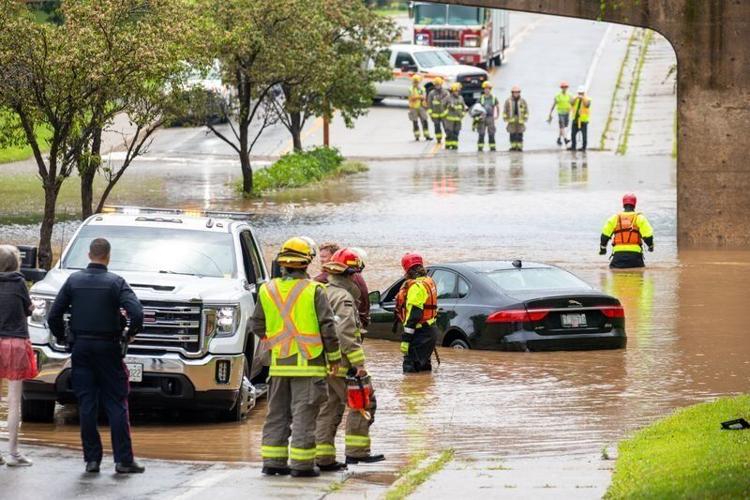
Recent heavy rainfall and flooding in St. Catharines have left property owners, restoration contractors and insurance professionals facing an urgent and difficult question: what needs to happen first?
After a flood, visible water is only one part of the problem. Moisture may have travelled behind walls, beneath flooring, into insulation or through other concealed building materials. Depending on the age and construction of the property, the restoration work may also disturb materials that could contain asbestos.
These conditions make a timely initial review especially important. Before the full extent of restoration can be determined, the affected areas must be documented, moisture conditions must be evaluated and potential environmental hazards must be considered. IES supports flood response in St. Catharines and the surrounding Niagara Region through initial damage reviews, moisture mapping and asbestos bulk sampling. These services give adjusters, contractors and property owners clearer information at the beginning of a loss, when informed decisions have the greatest effect on the efficiency of the response.
Recent Flooding in St. Catharines
St. Catharines and the surrounding Niagara communities have recently experienced periods of intense rainfall capable of overwhelming local drainage systems and causing localized flooding. Environment and Climate Change Canada warned that severe thunderstorms in the area could produce very heavy rainfall, flash flooding and hazardous road conditions.
The seriousness of the situation has also prompted calls for greater government support. In an August 4 interview with CityNews, St. Catharines Mayor Mat Siscoe discussed the continuing impact of the flooding and called on the Province of Ontario for a stronger response. His comments reflect the scale of the challenge facing the community as residents, insurers, contractors and local officials work through the immediate response and longer-term recovery.
The flooding affected residential, commercial and institutional properties in different ways. Some buildings experienced water entering through foundations, windows or exterior openings. Others faced basement flooding, sewer backup, groundwater infiltration or water moving through connected building assemblies. In areas closer to Twelve Mile Creek and other low-lying parts of the city, overland flow added to the pressure already placed on storm and sanitary systems.
The City of St. Catharines explains that basement flooding may result from several sources, including overland water, foundation drainage problems and overloaded sewer systems during heavy rainfall. The City also maintains a basement flooding information page with guidance for residents.
Regardless of how water entered a property, conditions after a flood can change quickly. Porous materials begin absorbing moisture immediately, and water can migrate beyond the area where it was first observed. Finishes that appear dry at the surface may remain wet underneath or behind them. A structured environmental review can help define the affected area before demolition and restoration proceed.
Why an Initial Damage Review Matters
The first hours and days following a flood are often hectic. Property owners want the water removed, insurers begin receiving claims and restoration contractors must determine what equipment and labour each site requires.
An initial review by IES provides an early, organized assessment of accessible flood-related conditions. The review may document visible water damage, identify materials and areas that appear to be affected, evaluate the likely path of moisture migration and flag conditions requiring additional investigation. This is not simply a record of what is visibly wet — the purpose is to build a complete enough picture of the loss that everyone involved can determine appropriate next steps.
This is where IES adds the most value for adjusters. During periods of widespread flooding, an adjuster may be responsible for dozens of claims at once, with limited time to assess which ones are straightforward and which need immediate technical attention. Using IES for an initial review gives adjusters reliable, consistent site information they can use to prioritize claims according to apparent extent, urgency and complexity — rather than working through files in the order they arrived.
A property with limited, readily accessible water damage may warrant a very different response than one involving multiple rooms, concealed moisture, suspect asbestos-containing materials or water from a potentially contaminated source. Sorting that out early lets adjusters direct resources to the losses that need them most urgently, and it gives restoration contractors a clearer scope before they mobilize — making the direction of each individual loss more efficient from day one.
What an Initial Review May Include
Every property and flood event is different. The scope of an initial review should reflect the building, the reported source of water, the areas affected and the work that may be required. An IES flood-related review may include:
- Observing and documenting accessible areas of visible damage
- Recording staining, swelling, deterioration or other signs of water impact
- Identifying finishes and building materials that may have been affected
- Reviewing the reported or apparent source and path of water
- Looking for evidence that water has travelled into adjacent spaces
- Identifying areas where further moisture investigation is appropriate
- Considering whether restoration work could disturb suspect asbestos-containing materials
- Recommending asbestos bulk sampling when warranted
The review establishes a defensible starting point. It helps the project team understand what is known, what remains uncertain and what information is needed before the restoration scope can be finalized.
Moisture Mapping After a St. Catharines Flood
One of the greatest challenges following a flood is that moisture does not always stay visible. Water can move beneath flooring, behind baseboards, inside wall cavities and into porous materials. Capillary action may draw moisture into drywall, wood and other materials well above the original water line, and concrete or masonry can retain moisture long after standing water has been removed.
Moisture mapping is the process of systematically assessing and documenting moisture conditions throughout the affected and surrounding areas. Rather than relying on visual observation alone, the assessor uses appropriate moisture-detection equipment and comparative readings to identify patterns — how far the water travelled, which materials are affected, whether adjoining “unaffected” areas are showing elevated readings, and where concealed or hard-to-reach locations may still be holding moisture.
This information matters differently to each party on a claim. For an adjuster, a moisture map is documentation that clearly supports the evaluated extent of a loss. For a restoration contractor, it informs equipment placement, drying strategy, selective demolition and monitoring priorities. For the property owner, it provides confidence that the response is looking past surface appearances. Moisture mapping doesn’t replace the contractor’s restoration plan or the adjuster’s coverage determination — it gives each of them better building-condition information to do their part well, which matters most when contractors, equipment and adjuster availability are all under pressure during a widespread event.
Why Asbestos Must Be Considered Before Demolition
Flood-damaged materials sometimes need to be removed so concealed areas can be accessed and the building can be properly dried. Demolition should never begin, though, without considering whether the materials being disturbed could contain asbestos.
Asbestos was historically used in a wide range of building products, and depending on a property’s age and renovation history, suspect materials may include drywall joint compound, plaster, vinyl floor tiles and adhesives, sheet flooring and backing, ceiling tiles, textured or sprayed finishes, mechanical insulation, cement products, and other insulation or surfacing materials. Its presence can’t be reliably confirmed or ruled out by appearance alone — laboratory analysis of representative bulk samples is generally required.
Flooding doesn’t create asbestos, but the restoration response can create a disturbance risk. Removing wet drywall, lifting flooring, opening ceilings or cutting into building assemblies can release fibres if asbestos-containing materials are present and the work isn’t handled with appropriate controls. That’s why asbestos considerations should be addressed early, before broad demolition begins — not discovered partway through.
Asbestos Bulk Sampling for Flood-Related Losses
Asbestos bulk sampling involves collecting representative samples of suspect building materials and submitting them to an accredited laboratory for analysis. IES can identify suspect materials within the anticipated work area, collect samples using appropriate procedures and arrange laboratory testing. The results determine whether asbestos-related precautions or specialized abatement procedures need to be built into the restoration project.
Early sampling prevents avoidable interruptions. If demolition begins before suspect materials are assessed, work may have to stop mid-project while testing is arranged — a delay that complicates drying, adds uncertainty and makes coordination harder for everyone on the file. When sampling happens early instead, adjusters and contractors can build the restoration scope around better information: negative results may allow work to proceed without asbestos-specific controls, while positive results let the project team plan the required precautions and engage qualified contractors before work stalls.
Sampling should be based on the materials that will actually be disturbed. If the restoration scope changes or additional building materials are uncovered as work progresses, further assessment may be required.
Making the Direction of Each Loss More Efficient
Flood claims involve several parties — the property owner, insurer, adjuster, restoration contractor and environmental consultant — each with different responsibilities but closely connected decisions. When the initial information is incomplete, direction becomes fragmented: contractors are unsure about the limits of removal, adjusters don’t have enough detail to gauge the extent of damage, and environmental testing gets requested only after work has already been delayed.
IES reduces that uncertainty by bringing the key information together early. An initial review documents the visible conditions, moisture mapping defines the affected area, and asbestos bulk sampling addresses suspect materials that could influence demolition. Together, these services move the file from an emergency report toward a practical, property-specific response plan — not by resolving every uncertainty in one visit, since flood conditions can evolve and concealed damage can still turn up, but by giving everyone a stronger, better-documented starting point.
What Property Owners Should Do After Flooding
Safety comes first. Property owners should avoid entering areas where floodwater may be in contact with electrical equipment or where structural conditions appear unsafe, and should avoid disturbing damaged materials that could contain asbestos.
Once immediate hazards have been addressed, useful next steps include:
- Contacting the insurer or insurance representative promptly
- Photographing and documenting visible damage when it’s safe to do so
- Recording the apparent source and timing of water entry
- Avoiding unnecessary demolition before suspect materials are assessed
- Keeping receipts and records related to emergency measures
- Following instructions from municipal officials and qualified professionals
- Arranging an environmental review when the extent of moisture or presence of hazardous materials is uncertain
Residents should also consult current information from the City of St. Catharines and other local authorities, since floodwater may contain contaminants and appropriate precautions should be taken during contact and cleanup.
Responding to Flood Damage Across St. Catharines
The recent flooding has shown how quickly heavy rainfall can affect homes, businesses and community facilities across St. Catharines — and why an organized initial response matters. Removing visible water is important, but it isn’t the end of the assessment. Moisture may remain in building materials, the true boundaries of the damage may be unclear, and demolition may involve asbestos-containing materials.
IES provides initial damage reviews, moisture mapping and asbestos bulk sampling to support informed flood response decisions across St. Catharines and the Niagara Region. By engaging IES early, adjusters get clearer site information to prioritize claims and direct each loss more efficiently, contractors get a clearer picture of affected areas and environmental requirements, and property owners get a more structured path forward.
If your property or claim has been affected by flooding in St. Catharines, contact IES today to arrange an initial review and determine which environmental assessment services are right for your situation.