
Radon in Ontario: The Indoor Air Risk You Can’t Detect Without Testing
- September 17, 2026
- Posted by: Nathan Edwards
- Categories: Environmental Consultant, Environmental Consulting, IES Consulting, Radon Testing
Some environmental hazards announce themselves. Radon doesn’t. It is invisible, odourless and tasteless, meaning testing is the only way to determine the radon concentration inside a building.
Radon is a naturally occurring radioactive gas that can accumulate inside homes, workplaces and other buildings. For property owners and employers in Ontario, understanding radon is an important part of maintaining a healthy indoor environment.
What Is Radon?
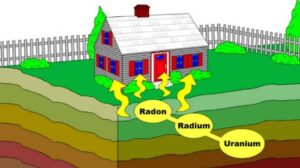
Radon is a naturally occurring radioactive gas produced by the breakdown of uranium found in soil and rock.
As radon is released from the ground, it can enter buildings through openings where the structure comes into contact with the soil. Common entry points may include cracks in foundation floors and walls, construction joints, gaps around pipes and service penetrations, floor drains, sumps, crawl spaces, and other openings within the foundation.
Once inside, radon can accumulate, particularly in lower levels and areas with limited ventilation.
Radon concentrations can also vary considerably from one building to another. Two neighbouring properties with similar construction can have very different radon levels.
Because radon cannot be detected by sight or smell, the only way to know the radon concentration inside a building is through testing.
Why Is Radon a Concern?
Long-term exposure to elevated concentrations of radon increases the risk of developing lung cancer.
When radon breaks down, it produces radioactive particles that can be inhaled. These particles can become deposited in the lungs, where the radiation they emit can damage lung tissue over time.
The risk increases with both the concentration of radon and the length of exposure. Smoking combined with radon exposure can further increase the risk of developing lung cancer.
What Is the Canadian Radon Guideline?
Health Canada’s current guideline for radon in indoor air is 200 becquerels per cubic metre (Bq/m³).
Corrective action is recommended when the average annual radon concentration exceeds 200 Bq/m³ in the normally occupied area of a building. The higher the measured radon concentration, the sooner corrective action should be taken.
It is also important to understand that the guideline does not mean there is zero risk below 200 Bq/m³. The objective is to keep radon concentrations as low as reasonably achievable.
How Is Radon Testing Performed?
Radon levels naturally fluctuate throughout the day and across different seasons. For this reason, a short measurement may not accurately represent the long-term exposure within a building.
Health Canada recommends long-term radon testing for a minimum of three months.
Testing during the heating season can be particularly useful because buildings are generally more closed during colder weather, providing a more representative measurement of potential long-term exposure.
Depending on the size and use of a building, multiple testing locations may be required to properly assess radon concentrations throughout the property.
Should Workplaces and Commercial Buildings Be Tested?
Radon is not only a residential concern.
Workplaces, schools, healthcare facilities, long-term care facilities and other public or commercial buildings can also contain elevated radon concentrations.
In Ontario, employers have a general duty under the Occupational Health and Safety Act to take every precaution reasonable in the circumstances for the protection of workers. Ontario guidance on radon in the workplace identifies 200 Bq/m³ as an important threshold when assessing and managing workplace radon exposure.
Buildings with occupied basements, below-grade work areas or other spaces in contact with the ground may warrant particular consideration.
What Happens If Elevated Radon Is Found?
Finding an elevated radon concentration does not necessarily mean there is a major structural problem with the building.
Radon concentrations can often be significantly reduced using established mitigation techniques.
One of the most common approaches is sub-slab depressurization, which uses a pipe and fan system to draw radon-containing soil gas from beneath the building and discharge it outdoors before it enters the occupied space.
The appropriate solution will depend on the building, measured concentrations and potential radon entry pathways. After mitigation work is completed, follow-up testing can confirm whether radon concentrations have been successfully reduced.
When Should You Consider Radon Testing?
Radon testing may be worth considering when assessing indoor air quality, purchasing or managing a property, evaluating a workplace or commercial building, occupying basement or below-grade spaces, completing building renovations, investigating environmental conditions within a property, or establishing a baseline for long-term building management.
Ultimately, radon levels cannot reliably be predicted based on the age, appearance or location of a building alone. Testing provides the information needed to understand the actual conditions within the property.
Understanding Your Indoor Environment
Indoor environmental hazards are not always visible.
Radon, mould, asbestos and other environmental concerns may require proper assessment and testing before their presence or significance can be determined.
IES Consulting Group Inc. provides environmental consulting and indoor air quality services to help property owners, businesses, contractors and other stakeholders better understand conditions within their buildings and determine appropriate next steps.
Have questions about radon or indoor environmental testing? Contact IES Consulting Group Inc. to discuss your property and determine the appropriate assessment or testing approach.